
Nerve Health · 660nm Ankle Therapy
Neurologist Reveals: 3 Don'ts and 2 Do's For Burning, Tingling Feet At Night
If something helped your feet for a few weeks and then quietly stopped working, read this short article before you buy one more thing.

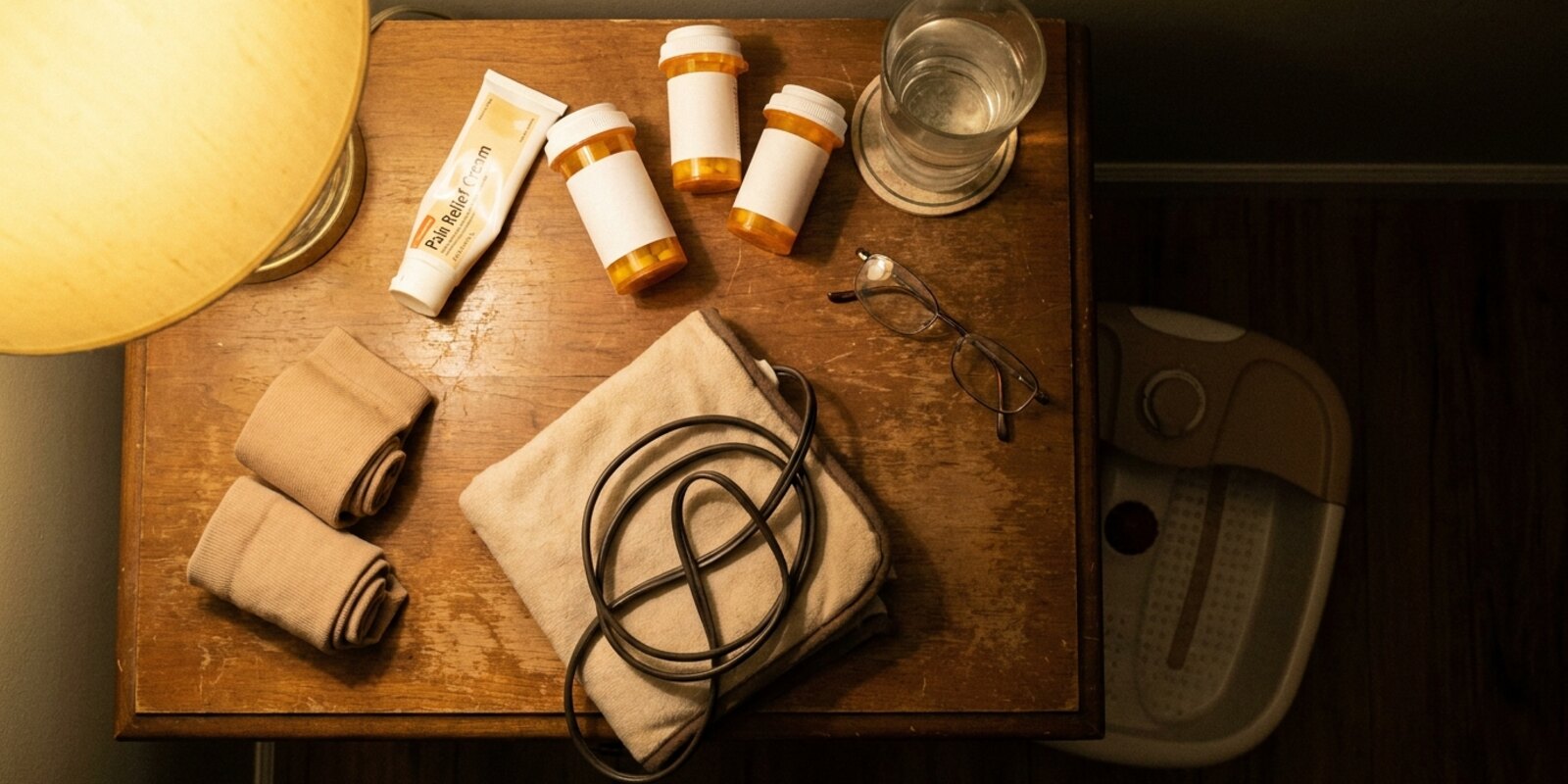
If your feet burn, tingle or go numb at night, you have almost certainly tried more than three things already. And if you are like most of the patients I see, at least one of them worked — for a few weeks.
Then it stopped. Not dramatically. It just quietly did less, and then less, until one evening you realised you had stopped reaching for it.
Most people take that personally. They decide their case is worse than other people's, or that nothing works on them.
Neither is true. There is a pattern, and it is a physical one. Below are the three most common things I ask patients to stop relying on, and the two I ask them to start with instead.
Relying on pills alone? ❌ Don't.
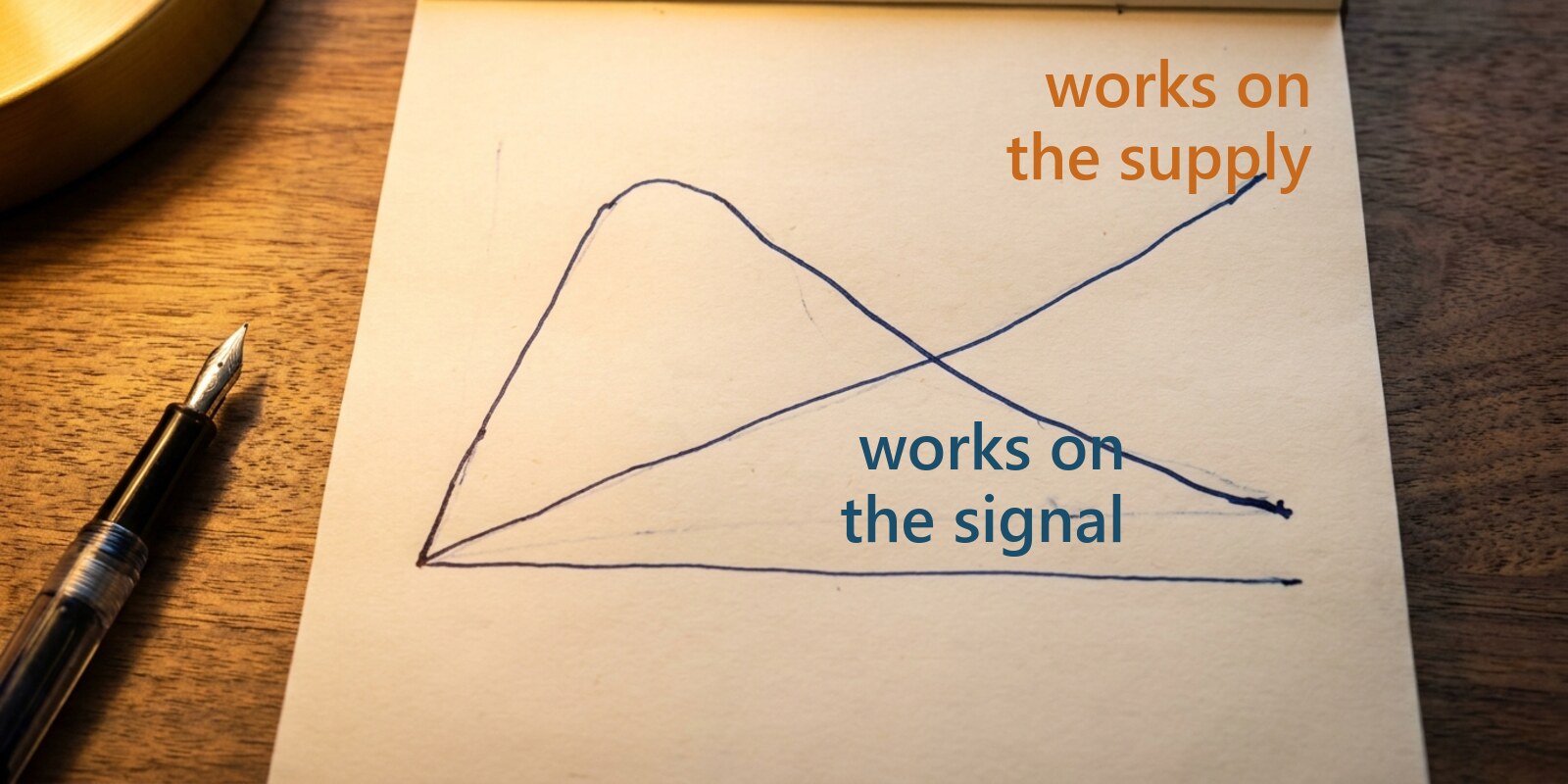
Gabapentin and pregabalin are legitimate medicines and I still prescribe them. But understand what they do: they act on the nerve signal as it arrives at your spinal cord. They work on the message, not on the foot that is sending it.
That is why the first month is usually the best month. A nervous system adapts to any signal you repeat — that is the single thing it is best at — and the dose that quieted your feet in March is quieter in June.
Hot soaks and the heating pad turned up? ❌ Don't — not this way.
Your instinct here is correct, and I will come back to it in a moment. But there are two problems with how it is usually done. The first is that the warmth stops when the pad does; nothing is left behind.
The second is a safety issue and I need you to take it seriously. Neuropathy reduces your ability to feel temperature. The nerve that would normally tell you "this is too hot" is the same nerve that is not working properly. A person with reduced sensation can burn the skin on their feet with an ordinary heating pad or a hot soak and not find out until the following morning. If people in your support group have warned you about heating devices, they were right — about uncontrolled ones.
A floor massager or foot spa? ❌ Don't expect it to last.
These feel wonderful, and I understand entirely why people buy them. But look at where they apply themselves: the sole of the foot.
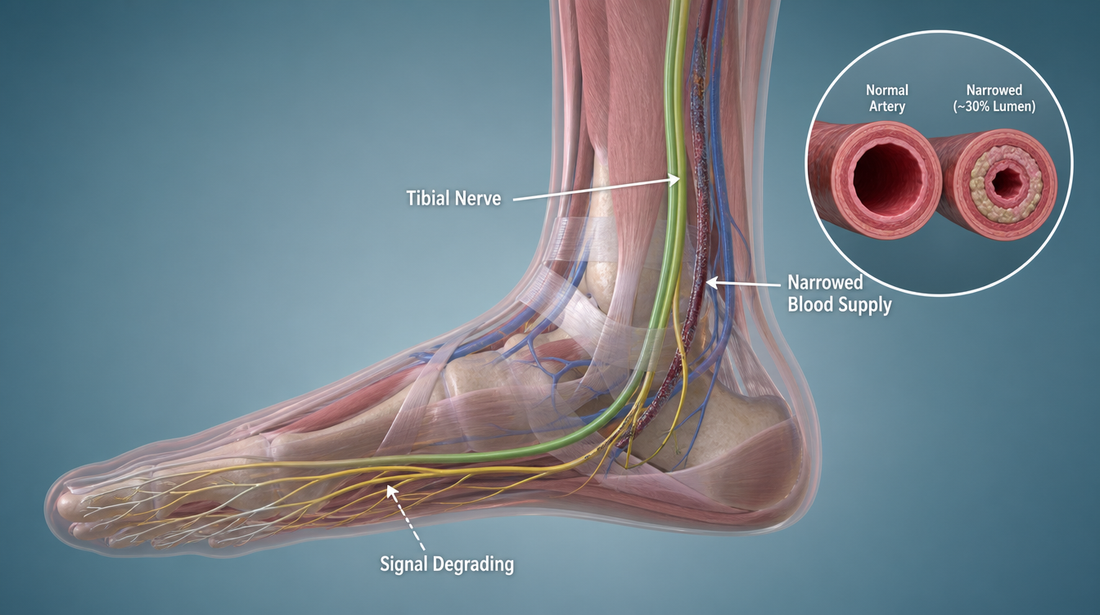
The nerve trunk that serves the whole underside of your foot does not run through the sole. It comes down the leg and passes through a narrow tunnel behind the inner ankle bone, and it branches there — and the small vessels that feed it run with it, through that same crowded space. The sole is where the symptom is felt. The ankle is where the supply comes through.
Rubbing the place where you feel it is not the same as treating the place it comes from. That is why the relief lasts as long as the session and no longer.
Warmth you can actually control, applied at the ankle? ✅ Do.
Here is the instinct from Number 2, done properly. Heat applied at the ankle widens the narrowed vessels that feed the nerve trunk on its way through — it opens the supply line rather than warming the surface where the symptom is felt.
Two conditions, and I would apply them to any product including the one I am about to tell you about. The heat must be specified in degrees, not adjectives — "warm / medium / hot" means there is no thermostat behind it. And it must shut itself off. For a foot that cannot reliably report temperature, an automatic shutoff is not a convenience feature. It is the safety mechanism your own nerve is currently failing to provide.
Using several therapies at once, in the same place? ✅ Do — and this is the one almost everybody misses.
Everything on this list so far addresses one layer of the problem. That is exactly why each of them fades: one lever, pulled repeatedly, on a system that adapts.
Burning feet at night are not a one-layer problem. There is the route the blood takes to the nerve. There is the blood actually moving through that route. And there is the energy the nerve cell itself is able to produce once supplied. No single therapy covers all three — which is why the honest answer is not a better version of one of them, but several working at once, at the same address.
Therapies that work on the supply do not fade the way therapies that work on the signal do — because there is nothing for your nervous system to grow accustomed to.
So what is actually causing the burning?
I need to tell you why I went looking for this, because it was not academic.

I have practised neurology for eighteen years and treated more than two thousand people with peripheral neuropathy. Then my mother, Ellen, developed it at seventy-four. The workup came back clean — not diabetic, no B12 deficiency, no chemotherapy history. Idiopathic, which is the honest word we use when we cannot name a cause, and also the word that ends the conversation.
I heard myself say to her the sentence I had said to two thousand strangers: we can manage the symptoms, we can't reverse the nerve. For the first time in eighteen years, it did not sound like medicine to me. So I went back — not to the treatments, to the anatomy.
And whatever started yours — diabetes, chemotherapy, alcohol, a back injury, or nothing anyone can name — this next part is the same. What sets neuropathy off differs from person to person. What keeps your feet burning tonight does not.
Your foot does not contain a wire
When somebody tells you that you have nerve damage, the same picture appears in everybody's head: a wire with a break in it somewhere. That picture is why the diagnosis lands like a sentence being passed. A wire is a dead object — nothing feeds it, nothing repairs it. You do not nurse a bad wire back to health.
But a nerve is living tissue, with its own blood supply and its own appetite. And that changes what your symptom means. A bad wire goes quiet — stopping is the only failure a dead object has available to it. Your foot did not go quiet. Your foot is loud. It reports fire at three in the morning when there is no fire in the room.
A dead object cannot invent a signal. Only something alive, and under stress, can.
Here is the part that is rarely explained. Nerves are fed by their own dedicated network of micro-vessels — a private supply line that serves the nerve and nothing else. With age, with years of high blood sugar, with a dozen other insults, those vessels narrow. The nerve is not severed. It is underfed. And an underfed nerve does not go silent; it misfires. Burning where there is no heat. Numbness and pain in the same foot at the same time.
I spent my whole career looking for a break. There was never a break. There was a shortage. You cannot feed a break. A shortage is something you can do something about.

The technology I had been dismissing for fifteen years
If the problem is supply and cellular energy, then the treatment has to do three things: reach the layer where the nerve trunk actually sits, reopen and keep open the vessels feeding it, and help the nerve cell make energy again.
Nothing on Ellen's list attempted the third. Creams and patches work in the skin — the nerve trunk is not in the skin, it is in the soft tissue behind the ankle. Pills work at the spinal cord. Massagers work on the sole.
What does reach a cell's ability to produce energy is a specific wavelength of red light — 660nm — absorbed by cytochrome c oxidase inside the mitochondria, the structures that generate a cell's energy. This is not new and it is not fringe. Red light healing came out of NASA research into growing plants and healing wounds in space, and then spent two decades sitting in sports medicine practices and rehabilitation clinics, because delivering it properly required panels costing $8,000 to $15,000.
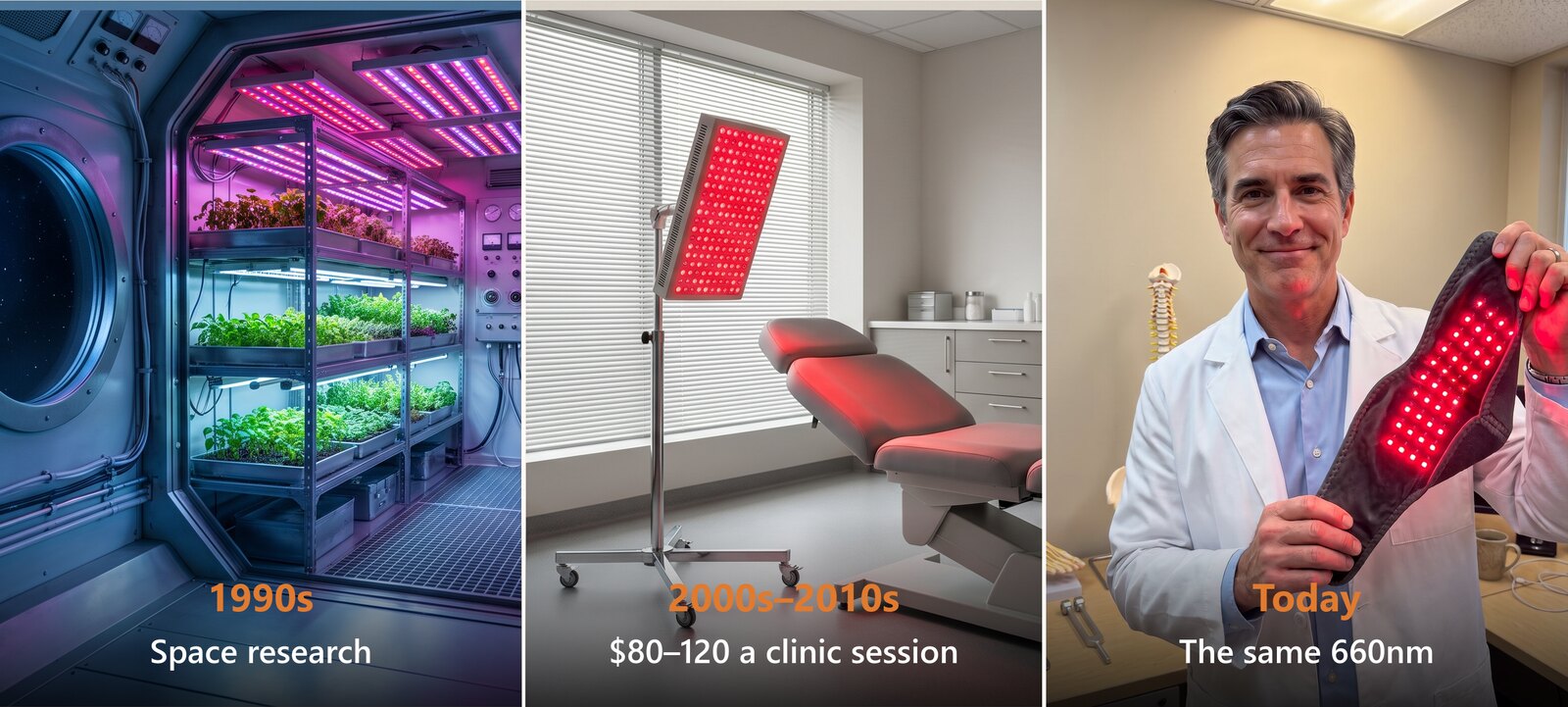
Which is why the people who have been quietly using it for years are professional athletes and people who can afford a clinic, and not the seventy-six-year-old woman lying awake in my mother's house.
The TheraPrime Triple-Therapy Ankle Recovery System
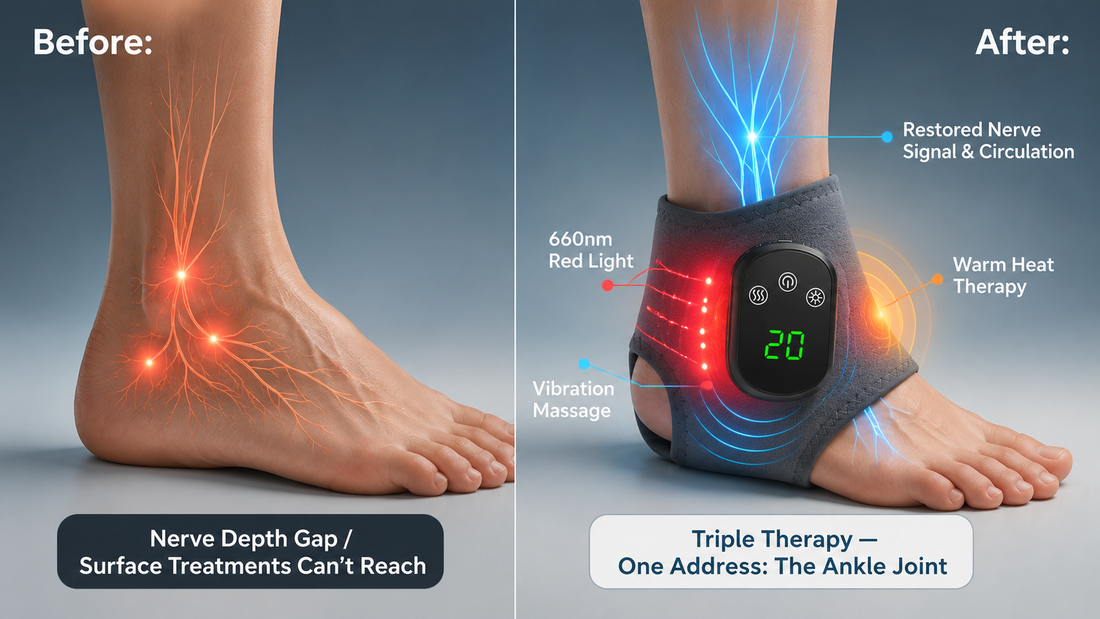
I contacted the engineering team at TheraPrime because I wanted the clinic wavelength in something my mother could put on while watching television. What we built is a 360° wrap that closes around the entire ankle joint — full contact from every side, because the nerve trunk, its branches and the vessels feeding them run around the joint, not along one face of it.
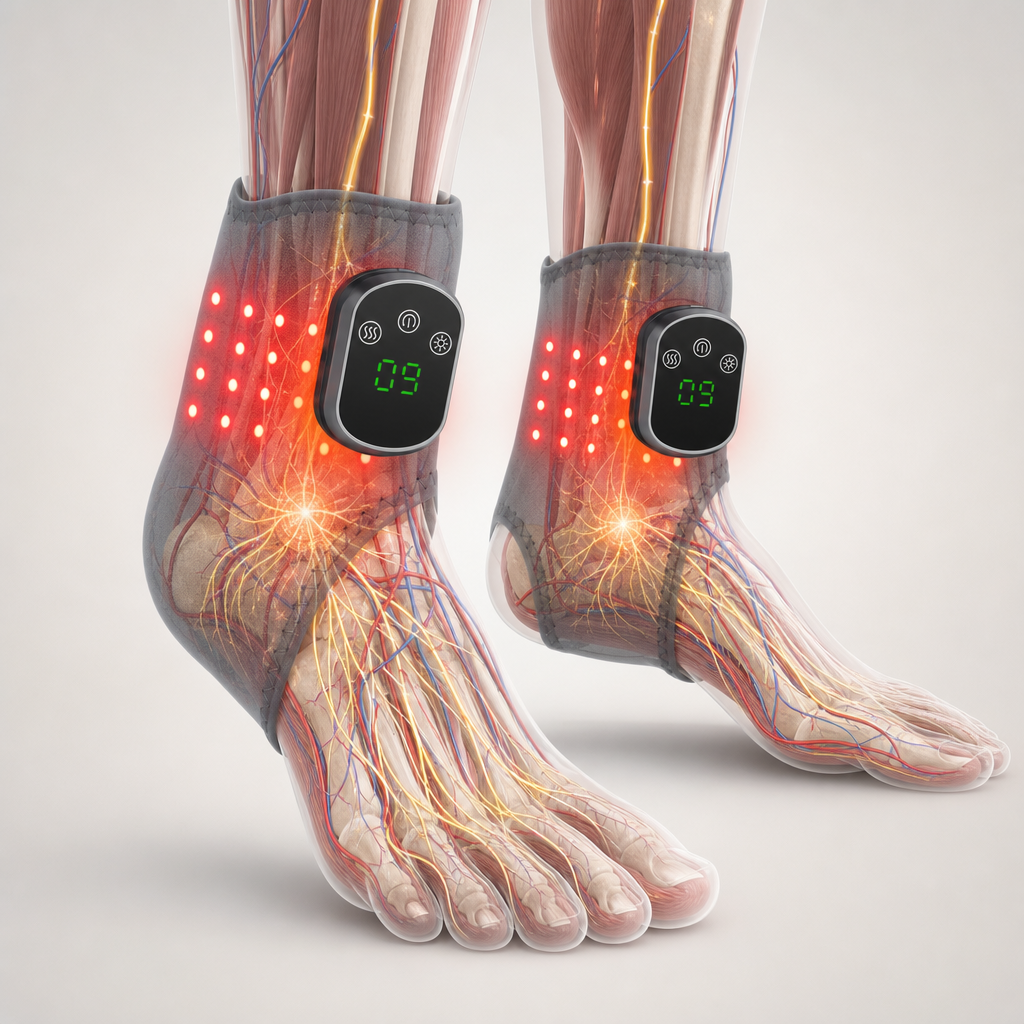
Three therapies run at the same time, at the same address. Each answers one of the three requirements above.
1 · 660nm Red Light — reaches the layer. 40 three-core LED beads emitting specifically at 660nm, absorbed by cytochrome c oxidase in the mitochondria of nerve cells — supporting energy production in cells that have been running on a reduced supply. This is the requirement nothing on Ellen's list even attempted.
2 · Targeted Heat — reopens the supply line. Five precise levels: 40°C, 45°C, 50°C, 55°C, 60°C. Degrees, not adjectives — the condition I set out in Number 4. Applied at the ankle, heat widens the narrowed vessels feeding the nerve. And the intelligent auto-shutoff is there for the reason I gave you in Number 2: it is the safety mechanism your own nerve is no longer providing.
3 · Vibration — keeps the blood moving through it. Three modes, delivered through the joint. Heat opens the vessel; rhythmic mechanical stimulation keeps fresh blood actively moving through it, carrying oxygen and glucose into tissue that has been short of both.
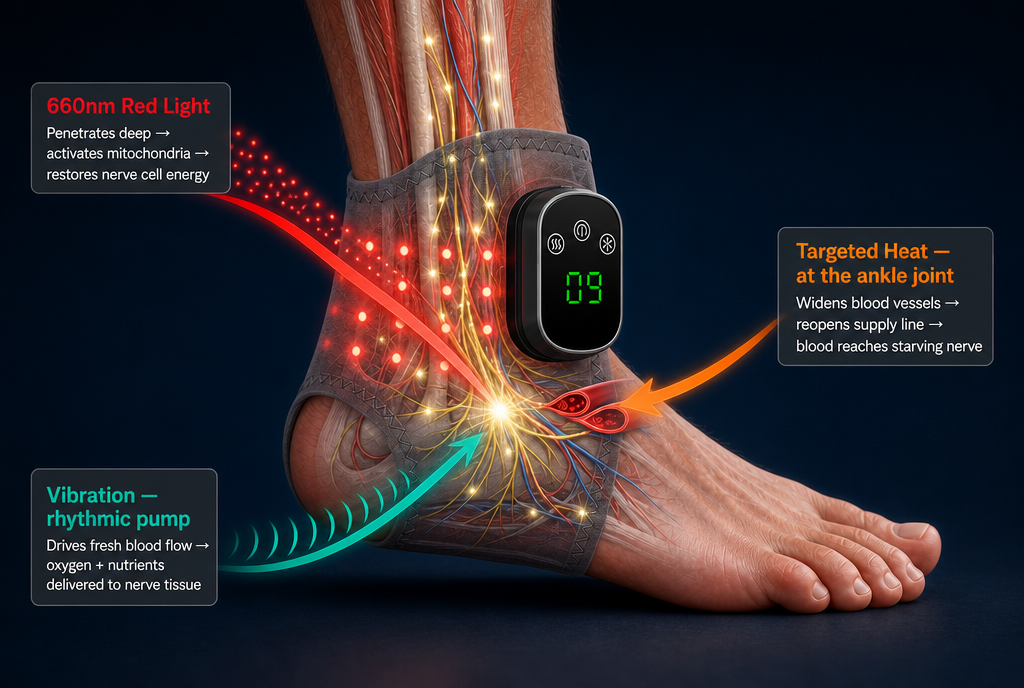
Twenty minutes. Once a day. The same session window used in clinical protocols.
Reopen the route. Keep it moving. And feed the cell directly. Heat and vibration work on the route. 660nm works on the power plant — because every one of your nerve cells has one, and that is the thing a wire never had. Take it away and you have repaired the road and left the engine cold.
Free shipping · 60-day money-back guarantee · Not sold on Amazon
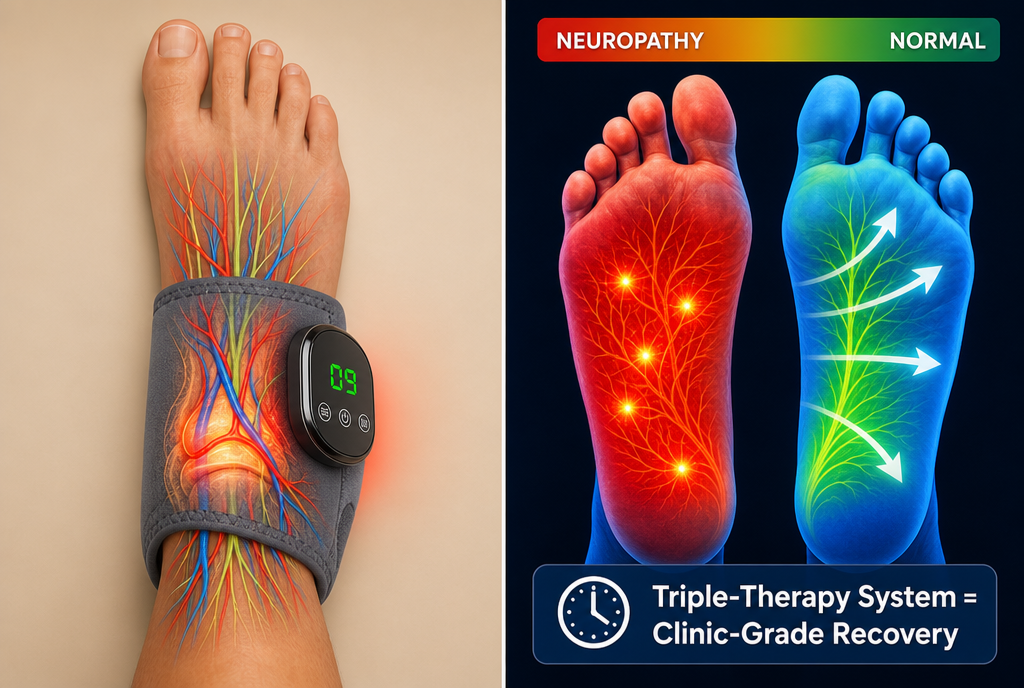
What happened with Ellen
I am a physician writing about my own mother, which is the least objective position a person can occupy. So I will tell you exactly what happened and nothing more.
Week one, she still woke at three, but the burning "stopped climbing" — it reached a level and stayed there instead of escalating. Week two, the night episodes were shorter and the morning numbness cleared faster. Week five, she slept through until five in the morning. She mentioned it on the phone, the way you would mention the weather.
I will not tell you this is a cure. It is not, and any product that tells you otherwise is lying to you. Nerve tissue recovers slowly when it recovers at all, and results differ between people.
For the first time in eighteen years, I was treating the supply instead of the signal. — Dr. Alan Reese, MD
Real people, real relief

Dorothy K., 68 · Richmond, VA
"I've had bilateral neuropathy for four years. I was skeptical of everything at this point. By week three, I slept through the night for the first time in two years. I ordered a second one for my sister in Dallas."
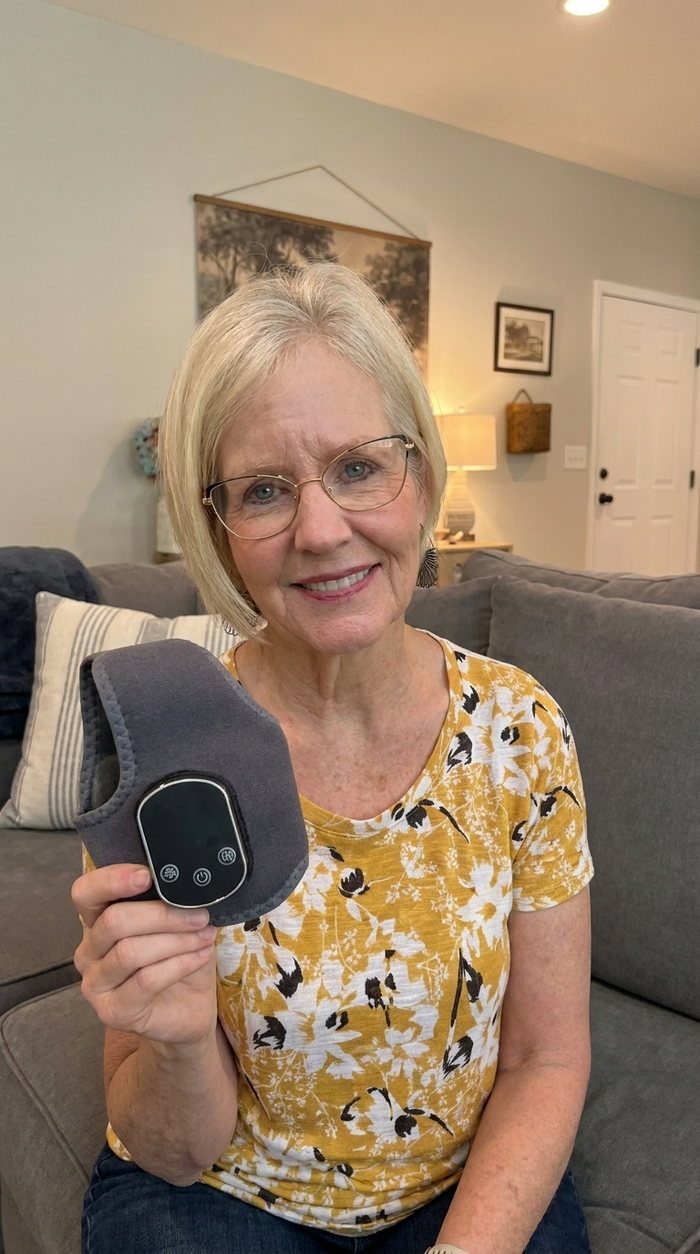
Margaret S., 67 · Atlanta, GA
"Bilateral neuropathy. I'd tried everything already — gabapentin, B12, foot massagers. None of it reached far enough. Week three of using this, my husband noticed I stopped getting up at 3 AM to sit in the dark."
Two questions to ask before you compare it with anything else
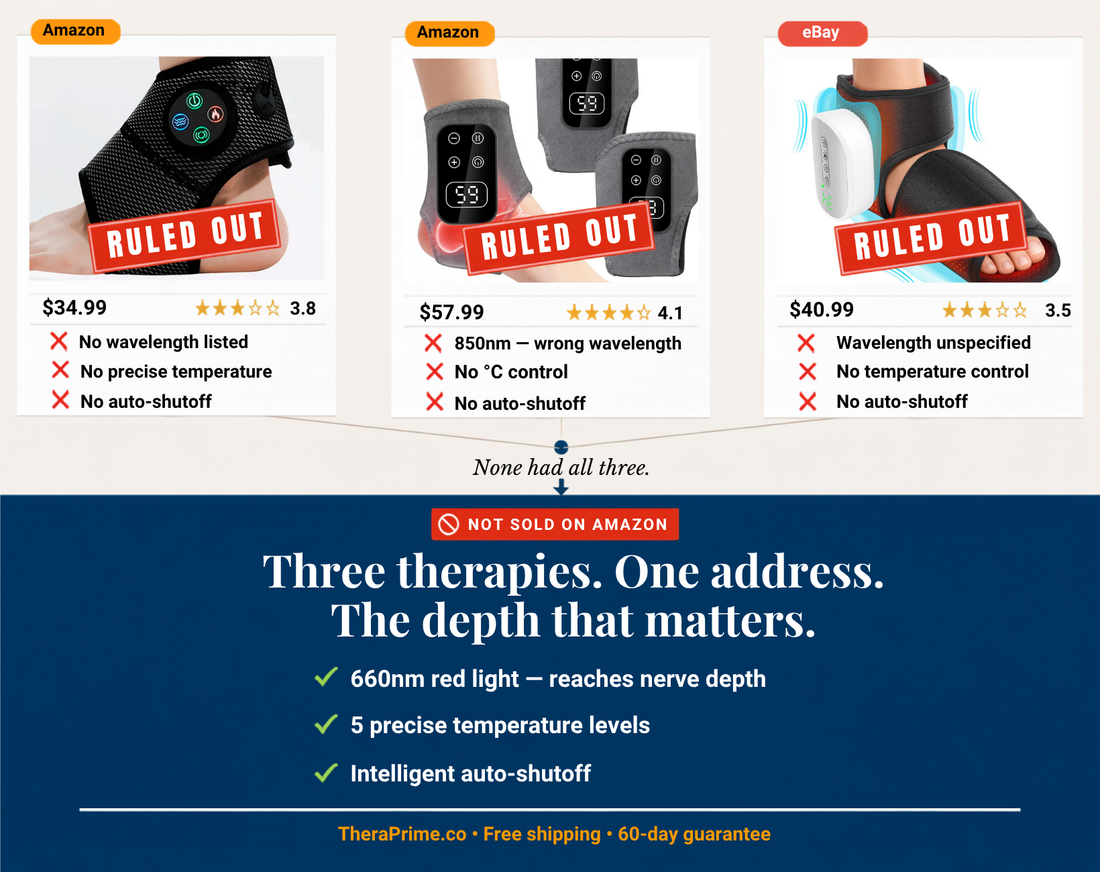
You will find ankle wraps online that look identical in a thumbnail, some at $30 to $60. As a physician, here are the two questions I would ask about any of them — including this one.
1. What is the wavelength — the number, not the label? "Red light therapy" is a category, not a specification. "Infrared" without a figure usually means nobody wants to tell you. A wrap with heat and vibration but no 660nm is working on the route and nothing else — it repairs the road and leaves the engine cold.
2. Does the heat have degrees and an automatic shutoff? If it says "warm / hot," there is no thermostat behind it. For a person with reduced sensation in the feet, that is a burn risk, not a comfort preference.
What it costs, and the 60 days
Photobiomodulation at a physical therapy or sports medicine clinic runs $80 to $120 per session, when you can find a practice offering it at all. A standard course is twelve sessions: $960 to $1,440, before follow-ups and before the drive.
What this costs — and what it's worth
One more thing I would say to you as a clinician, and you are free to ignore it.
This type of neuropathy is length-dependent — it attacks the longest nerve fibres in the body first, which means it begins at the far end of both legs at the same time. That is why the classic presentation is called a stocking distribution, and why nearly every patient who walks into my clinic describes it in both feet. If one foot is currently worse, that is almost always a difference in timing, not a difference in whether the other foot is involved.
So if you can, treat both. The Symmetry Pair — two wraps, one for each ankle — is $149.97, which means the second ankle costs $40 rather than another $109.97. I am telling you this because treating one ankle and leaving the other is treating half of a symmetrical condition — not because it is the larger order. One is enough to find out whether this works for you.
And then: 60 days, full money-back guarantee, no questions asked. Use it every day for two months. If your nights are no different, send it back. Nerve tissue does not respond in a week — which is exactly why the trial window has to outlast the point at which you would give up.
Free shipping · 60-day money-back guarantee · Not sold on Amazon
One last thing, whether or not you buy anything
Go back to the list at the top and ask the question I put in the caption of my own photograph: where does the thing you are currently using actually stop?
If it stops at the message, expect it to fade. If it stops at the skin, it never arrived. Your nerve is not necessarily broken. It may be underfed — and those are two completely different problems. For eighteen years I gave people the answer to the first one when many of them had the second.
Ellen asked me where it stopped, once, sitting in a dark kitchen at three in the morning. I did not have an answer that night.

I have one now. And last Sunday she was back down on the living room floor with her granddaughter, doing a puzzle. — Dr. Alan Reese, MD
Reader Offer — Solo Recovery (1 Wrap)
Just $109.97
Less than two clinic sessions · Symmetry Pair for both ankles $149.97
- CE Certified
- FCC Certified
- RoHS Certified
- Free Shipping
- 60-Day Money-Back
Research References
The sources below support the mechanism described in this article. They are listed so you can read them yourself.
- Where the posterior tibial nerve lies at the ankle — Ultrasound study of 100 healthy volunteers. The nerve trunk sits within the soft tissue behind the inner ankle, and its position varies considerably from person to person. PMC12732173
- Where the nerve divides — Cadaveric anatomical study. In the great majority of people, the nerve branches inside the tunnel behind the inner ankle bone. PMC3718430
- Blood supply and nerve signalling — Animal study. Dysfunction in the small vessels supplying nerve tissue was detectable before any measurable slowing of nerve conduction — consistent with supply failing first and signalling failing after. PMC2477757
- Photobiomodulation therapy for peripheral neuropathy — RCT, n=200, Type 2 diabetic peripheral neuropathy. PBMT (10 sessions) significantly reduced neuropathic symptoms and improved protective foot sensation vs. control. PMID 40090424
- Vibration therapy in diabetic peripheral neuropathy — RCT. Vibration produced neuromuscular activation and improved sensory perception, disability score and balance measures. PMC7270395
Medical & Health Disclaimer
The information and other content provided on this page, or in any linked materials, are not intended and should not be construed as medical advice, nor is the information a substitute for professional medical expertise or treatment. Individual results vary. This device is not intended to diagnose, treat, cure or prevent any disease. If you or any other person has a medical concern, consult a health care provider before beginning any new therapeutic regimen — particularly if you have diabetes, take anticoagulants, or have open wounds or active infection at the treatment site.